
Iran Attack Raises More Questions About Insider Trading on Prediction Markets-BY NICK DEVOR , BARRON'S



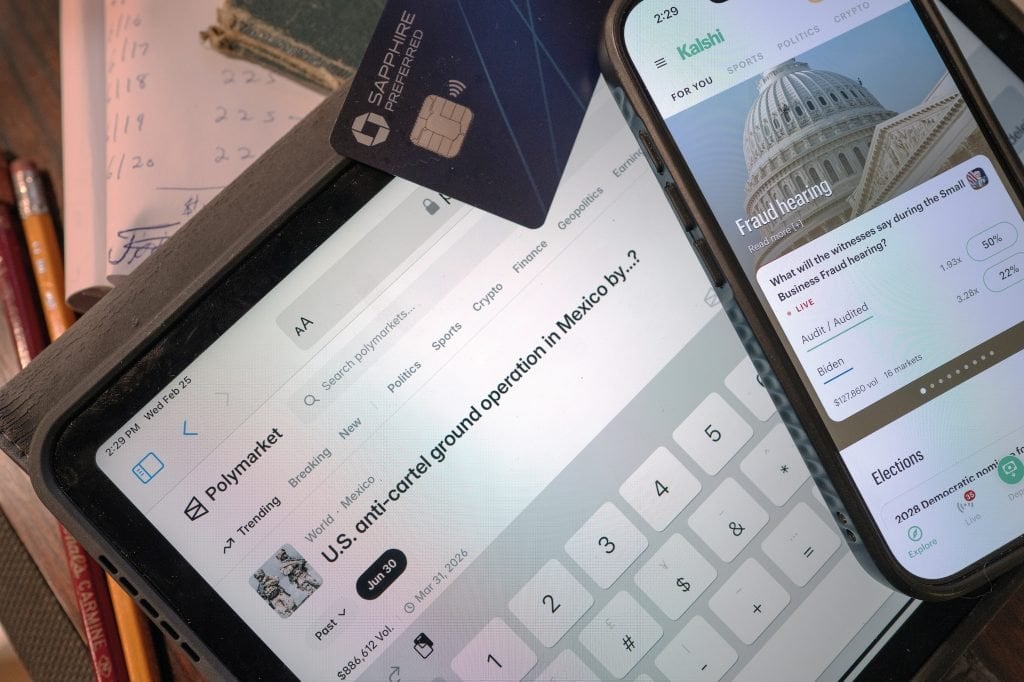
Hours before American and Israeli missiles rained down on Iran, killing the country’s leadership, a Polymarket trader loaded up on bets that Ayatollah Ali Khamenei would be “out as Supreme Leader of Iran by March 31.”
When President Donald J. Trump announced that Khamenei was dead, the trader’s $23,000 position turned a $120,000 profit.
On a stock exchange, any evidence of insider trading would quickly draw the attention of corporate counsels and regulators. On prediction markets, it could be an unavoidable part of the business model.
The bets on this weekend’s military strikes are hardly the first suspiciously-timed trades made on Polymarket.

On Dec.16, a new anonymous account on the prediction-market platform made a $68,000 bet that Kevin Hassett would be nominated as the next Federal Reserve chair. An official Polymarket social-media account posted a screenshot of the trade, seeming to suggest it came from a person in the know: “Either @novice99 can read Trump’s mind, or they’re serving coffee at Hassett’s breakfast meetings.”
Stand CEO Edward Ridgely, who designs software for prediction-market traders, says there are times when “insiders are obviously shaping the market.” He pointed to the spike in Polymarket odds that Taylor Swift would get engaged hours before the pop star’s official announcement.
In the end, Hassett didn’t get the nod for Fed chair. The Polymarket social-media account has made more than two dozen posts flagging other potential insider transactions happening on the company’s prediction market. The posts allow other Polymarket users to play along. About half of the bets paid off, Barron’s found.
Polymarket didn’t respond to questions about the social-media posts. “Having an edge to the market is a good thing,” Polymarket CEO Shayne Coplan told 60 Minutes in November, in response to a question about inside information on the platform. Coplan said the company has focused on the ethics of insider transactions, before adding that it was “sort of an inevitability that this will happen, and there’s a lot of benefits from it.”
Both Polymarket and rival Kalshi tout the learnings that come from people putting money on future events. For the predictions to be accurate, or efficient, the platforms rely on a pool of traders to distill the wisdom of the crowd.
The prediction markets are under growing scrutiny as a steady drip of questionable trades make headlines. In early January, one trader made a $30,000 bet on the ouster of Venezuelan President Nicolás Maduro hours before he was captured by U.S. forces, resulting in a $400,000 payout. The trade spurred U.S. Rep. Ritchie Torres (D., N.Y.) to introduce a bill barring federal workers from prediction markets.
Last month, an Israel Defense Force reservist was arrested and charged for allegedly trading on military operations through Polymarket.“In carrying out such bets, relying on secret and classified information, there is a real security risk to IDF activities and state security,” the Israel Police said in a statement.
How to handle inside information is already generating a schism in the prediction-market world. Kalshi’s rulebook explicitly bans “insiders” from trading on its markets; Polymarket’s rulebook does not.
Last week, Kalshi announced that it had suspended two accounts for suspicious trading: a former California gubernatorial candidate who bet on himself to win the 2026 governor race, and an employee of YouTube star MrBeast who traded event contracts related to his boss’ videos. The Commodity Futures Trading Commission said in a follow-up press release that both instances were potential violations of insider trading laws.
The California candidate didn’t respond to a request for comment, and the MrBeast employee couldn’t be reached.
The Coalition for Prediction Markets, a Washington, D.C.–based trade group, has recognized the potential damage from insider trading. In January, it took out a full-page ad in the Washington Post emphasizing that “regulated prediction markets (already) ban insider trading.”
Kalshi is a member of the coalition; Polymarket isn’t.
In January, a Polymarket trader with the username “HD2” bet nearly $100,000 that BlackRock executive Rick Rieder would be nominated as the next Federal Reserve chair. Polymarket Money, an X account run by Polymarket, posted a screenshot of the trader’s account. Polymarket’s own annotation emphasized that HD2 was new to the platform. “Who is @HD2?” Polymarket Money asked.
Market watchers say that accounts making large, first-time bets can be a signal of insider activity.
In another post , Polymarket Money said that a trader on its platform either “sees the future, or they’re writing the script.”
Since its first X post on Dec. 9, Polymarket Money has shared a total of 25 posts that identify possible signals of insider trading on Polymarket, Barron’s found. In each example, Polymarket Money posted a screenshot of a trade and asked followers what the trader might know.
Polymarket didn’t make executives available for comment, and it didn’t respond to questions about whether its system took additional steps to monitor the trades.
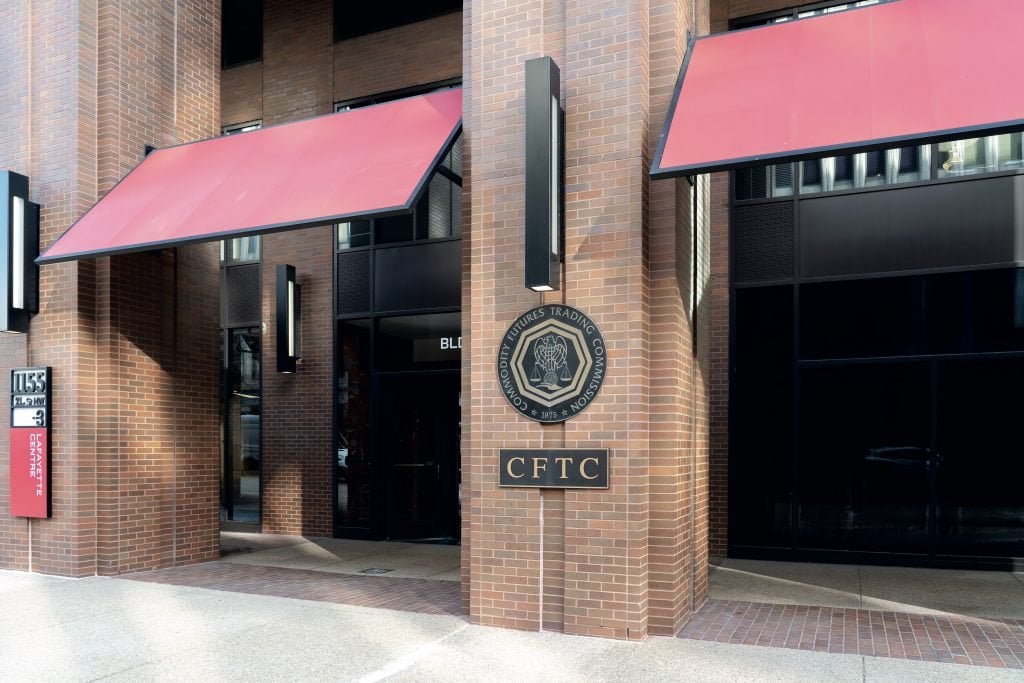
The CFTC requires prediction-market operators to have trading surveillance systems on par with those at other licensed exchanges, like CME Group’s Chicago Mercantile Exchange.
Eventus, which provides market-surveillance software, lists Polymarket as a client on its website.
Polymarket has said it complies with applicable laws, and CEO Shayne Coplan told The Wall Street Journal that “the moment there’s a suspected insider, it’s pointed out on X, and it’s visible on Polymarket immediately.”
Polymarket has a data partnership with Dow Jones, the publisher of Barron’s.
Kalshi told Barron’s that if the HD2 trade were made on its platform, it would be flagged by their monitoring system.
Prediction markets sell event contracts, a financial instrument regulated by the Commodity Futures Trading Commission, whose insider trading rules are modeled after those of the Securities Exchange Commission, the stock market regulator.
The CFTC says it has “full authority to police illegal trading practices.” Those illegal practices include the “misappropriation of confidential information in breach of a pre-existing duty of trust and confidence to the source of the information.”
When it comes to stock trading, companies often have their policies in place to protect against the chance of insider trades.
“It is illegal to buy or sell shares in Walmart or our business partners based on important or sensitive inside information,” Walmart says in its employee code of conduct. There’s no mention of prediction markets.
It’s unclear how many companies have taken the step of explicitly banning employees from using work-related information to trade on prediction markets. Barron’s asked all 30 companies in the Dow Jones Industrial Average if they had issued new guidance around trading on prediction markets since their mainstream emergence last year. One declined to comment; 29, including Walmart, haven’t responded.
Not all trading by insiders is illegal. Company executives, for instance, can trade their stock according to certain rules and trading windows. Those trades are often closely watched by market participants seeking to track the so-called smart money.
Prediction-market traders are now doing the same thing. Some have made big money mimicking the trades of potential insiders with specialized software that can instantly copy the moves of any trader on Polymarket, which posts all of its transactions to the blockchain.
Stand, Ridgely’s firm, has facilitated more than $200 million in trading volume across Polymarket and Kalshi.
As with most exchanges, trade monitoring largely falls on the prediction-market platforms, which are tasked with identifying suspicious patterns such as new accounts making large trades and quick withdrawals after a winning bet.
The CFTC steps in when the platforms refer cases for investigation, or when it deems surveillance systems to be insufficient. The agency’s capacity to regulate prediction markets and other exchanges has been curtailed over the past year, however.
Barron’s reported in early February that the regulator’s storied Chicago office had zero enforcement attorneys and progress on enforcement actions had been slowed by layoffs and attrition.
“Several employees left before my tenure, but we have appropriate resources throughout the country,” CFTC Chair Mike Selig recently told Barron’s .
The rapid ascent and large variety of prediction markets has presented new challenges to regulators and complicated the surveillance of suspicious trades.
Joe Schifano, head of regulatory affairs at Eventus, says his company’s surveillance tools take in all kinds of data to develop scenarios consistent with insider trading and manipulation. When a user makes a trade or a series of trades that line up with an established scenario, red flags go up.
Kalshi is constantly writing contracts with new language, says Nicole Kagan, who drafts many of those contracts for Kalshi.
The speed at which new contracts are listed along with their sheer number and variety—Kagan says Kalshi has “thousands”—makes it “theoretically impossible to create a scenario for surveilling each one that’s tailored to each contract,” says Dorothy DeWitt, the director of the CFTC’s division of market oversight from 2019 to 2021, when the regulator first granted a U.S. license to Kalshi.
Monitoring tools are built on decades of observing activity in commodities markets, DeWitt says. Prediction-market oversight doesn’t get the benefit of that history.
Asaf Meir, CEO of Solidus Labs, Kalshi’s monitoring partner, says the most sophisticated market abusers know that those limitations in surveillance systems exist, and are constantly testing the boundaries set by prediction markets. The role of the exchanges is to stay one step ahead, Meir says. “It’s a bit of a cat-and-mouse game.”
Prediction markets are raising new questions in an age-old debate around information and free markets. In fact, some see inside information as key to prediction markets’ accuracy, which has been touted in academic research.
“I think it’s actually incredibly important to have some form of insider information in these markets,” says Polygon Labs CEO Marc Boiron, whose firm operates the blockchain used by Polymarket. “When nobody has information that is actually useful to determine the outcome of that market, you’re just plain gambling.”
Still, Boiron and Kalshi emphasize the need for fair markets and insider-trading laws.
Robert DeNault, Kalshi’s head of enforcement, says insider trading can reduce market participation over the long term. “If a user can’t trust that they’re going to come onto our platform and not be in an unfair information asymmetry with another user, then they’re not going to keep using our platform,” he says.
A few traders who spoke to Barron’s believe they’ve been on the losing side of an insider trade. Kyle Baker once had positions on a Saturday Night Live mention market, betting on what words the host would say in their opening monologue. A few hours before the show went on the air, he saw a raft of new activity on Kalshi’s order book. The inside information? Potentially someone who watched the dress rehearsal of the show just a few hours earlier.
Write to Nick Devor at [email protected]
免責聲明:本專頁刊載的所有投資分析技巧,只可作參考用途。市場瞬息萬變,讀者在作出投資決定前理應審慎,並主動掌握市場最新狀況。若不幸招致任何損失,概與本刊及相關作者無關。而本集團旗下網站或社交平台的網誌內容及觀點,僅屬筆者個人意見,與新傳媒立場無關。本集團旗下網站對因上述人士張貼之資訊內容所帶來之損失或損害概不負責。