

Most Rare Diseases Have No Approved Drug.This Accelerator Aims to Help -By Brian Gormley, WSJ



A new accelerator will invest in treatments for rare diseases through a model that blends philanthropy and venture capital.
Pittsburgh-based Rare Ventures has launched with an up to $25 million investment from the Richard King Mellon Foundation.
Like any venture investor, Rare Ventures looks to make money by betting on high-growth startups. But instead of returning capital to limited partners, the firm will plow investment gains into more investments, creating what it hopes will be a self-sustaining model to fund research into many rare disorders.
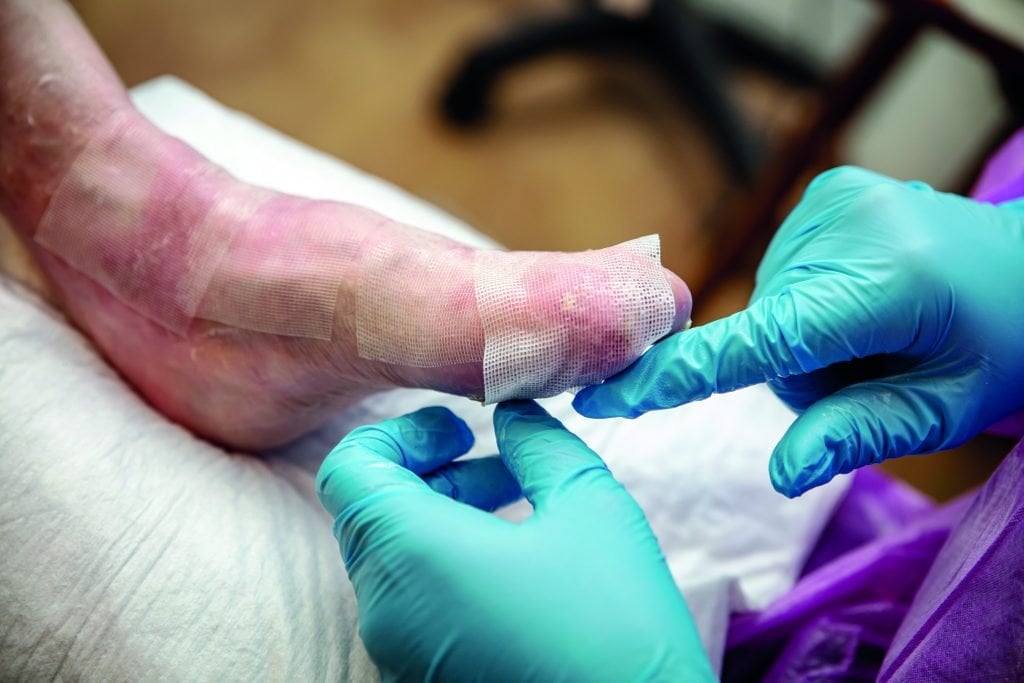
Rare Ventures is extending the “venture philanthropy” model of the EB Research Partnership, a New York-based nonprofit that funds research into treatments for epidermolysis bullosa, a group of genetic diseases that give the skin a papery quality prone to blistering. EB Research has backed several biotechs that have put forward treatments, but there is still no cure.
Venture philanthropy isn’t new. Several nonprofits have created venture programs, including the Cystic Fibrosis Foundation and Breakthrough T1D, which makes venture investments in startups targeting Type 1 diabetes through the T1D Fund.
But Rare Ventures’s approach is unusual in that it will take aim at a variety of disorders—instead of a single one—expanding on the conventional way.
“The demand is there and we knew we had a model that could help many other rare diseases,” said Michael Hund, chief executive of EB Research and co-founder and CEO of Rare Ventures. A rare disease is one that affects fewer than 200,000 people in the U.S.
Before joining EB Research, Hund was director of development for the Multiple Myeloma Research Foundation, which made venture investments in companies targeting this type of cancer. While still at the MMRF, Hund began work on his M.B.A. at Yale School of Management, where he worked on an idea for a comprehensive venture-philanthropy strategy.
While earning this degree, however, EB Research recruited him to be its first CEO. The organization had made venture investments before, but Hund institutionalized this brand of philanthropy when he joined in December 2017. Now, all EB Research investments follow that model, he said. Around 25,000 to 50,000 people are estimated to have epidermolysis bullosa in the U.S., most of them children.
Jill and Eddie Vedder, the lead singer for the band Pearl Jam, formed EB Research in 2014. Jill Vedder had a childhood friend whose brother had a son with epidermolysis bullosa. After getting to know the family, the Vedders invested their own money and put on concerts and other events to raise funds to launch the EB Research Partnership, Hund said.
In 2017, the nonprofit invested just over $800,000 in Krystal Biotech , shortly after the drug company’s initial public offering. In 2023, Krystal won Food and Drug Administration approval for Vyjuvek, the first approved treatment for any form of epidermolysis bullosa.
That investment returned more than $2 million to the nonprofit, Hund said.
EB Research also makes grants to academic scientists that entitle the nonprofit to a percentage of the revenue generated from their research. Last decade, the organization provided funds to a team led by Dr. Jean Tang, a professor of dermatology at Stanford University School of Medicine. Their research was later licensed to Abeona Therapeutics , which in 2025 secured FDA approval for another epidermolysis bullosa treatment, Zevaskyn.
EB’s total $500,000 investment—which turned into shares of Abeona—led to a $3 million gain, Hund said.
Having succeeded with investments in one disease, Hund is expanding the EB Research model with Rare Ventures. The new accelerator will focus initially on seven rare conditions, including epidermolysis bullosa, the neurodevelopmental condition PACS1 syndrome and LMNB1-related adult-onset autosomal dominant leukodystrophy, a neurodegenerative disease.
Rare Ventures is approaching its task with urgency, said Sam Reiman, director and trustee of the Richard King Mellon Foundation. “Many individuals afflicted by these rare diseases don’t have time to wait,” he said.
Rare Ventures has assembled a network of universities and industry partners, including the UPMC Children’s Hospital of Pittsburgh, Carnegie Mellon University, Stanford University Medicine and ElevateBio, a venture-backed company that provides contract development and manufacturing services for biotechs.
There are thousands of rare diseases and most have no approved treatment. “Clearly what we have to offer today is just not good enough,” said Dr. Terence Dermody, chair of pediatrics at the University of Pittsburgh School of Medicine and physician-in-chief and scientific director at UPMC Children’s Hospital of Pittsburgh.