
Hermès Has Big Watchmaking Ambitions. The Cult of the Birkin Is Getting in the Way.-By Carol Ryan,WSJ



Nothing says “I only bought this to get a Birkin” like an Hermès watch.
At least that is a perception the French brand is fighting as it tries to be taken seriously as a maker of high-end mechanical watches. Trends in the secondhand market show why that will be challenging.
Hermès’s watch unit has been one of its fastest-growing divisions in recent years and has almost tripled in size since 2019. Although sales were weaker in 2025, the brand sold more than half a billion euros of watches.
That is impressive, but Hermès watches are still sometimes seen as Birkin bait—products that shoppers only buy to be offered one of its in-demand handbags.
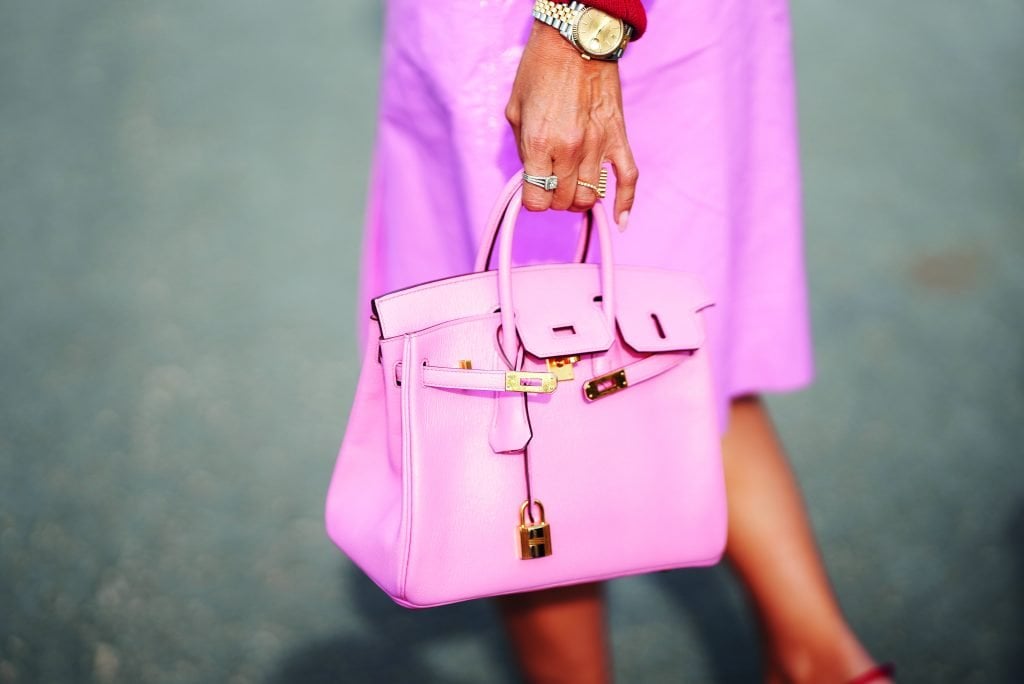
Although the brand never spells it out explicitly, there is a perception among Birkin collectors that they must spend heavily on other Hermès goods to be offered one of the bags. Dropping tens of thousands of dollars on a watch is a good way to curry favor with sales assistants who allocate Birkins to clients.
High numbers of brand-new Hermès watches end up listed on secondhand websites. This could be a sign that shoppers immediately resell them to claw back some of their cash.
The largest luxury resale platform in the U.S., The RealReal, has sold three times as many pristine Hermès watches on its site over the past five years as Chanel ones, despite both brands’ selling roughly the same number of watches annually, based on Morgan Stanley estimates.
The reseller has sold 33% more pristine Cartier watches than Hermès over the same period. However, Cartier’s annual watch production is 10 times as large as that of Hermès.
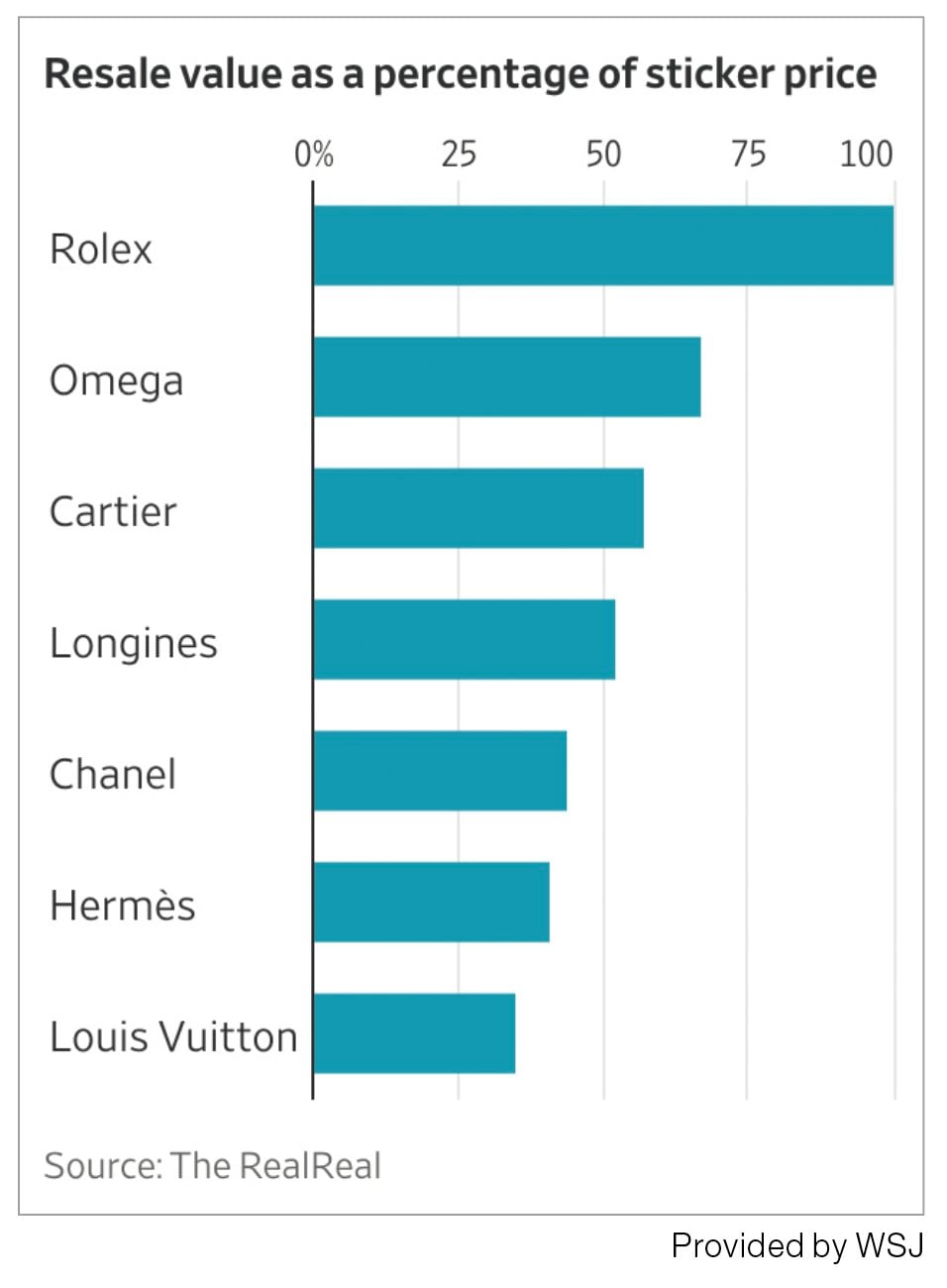
The amount of supply on secondhand sites means Hermès watches don’t hold their value. Mint-condition Hermès watches on The RealReal have resold at 41% of their original sticker price on average so far in 2026. By comparison, a person who resells a pristine Rolex will get all of his or her money back, and can make a profit on scarce models like the Daytona. A mint Cartier watch recoups two-thirds of its original price.
What’s more, the resale value of Hermès has also been moving in the wrong direction lately. Four years ago, one of the brand’s mint-condition watches fetched 51% of its original value at resale, 10 percentage points higher than today. Compare that with Cartier. Its value retention has climbed 15 percentage points over the same period.
Hermès has spent more than two decades and tens of millions of dollars building credibility as a serious watchmaker.
In the early 2000s, the brand treated watches as an entry-level product to attract new customers. Hermès was churning out around 280,000 watches a year, according to Oliver Müller, founder of Swiss watch consultancy LuxeConsult. Most of the watches were quartz and priced below 1,000 Swiss francs, or about $1,230 at current exchange rates.
Then, in 2006, Hermès bought a 25% stake in Vaucher Manufacture Fleurier, a Swiss maker of mechanical watch movements. A few years later it bought Nateber SA, a maker of dials, and watch manufacturer Joseph Erard Holding. The brand is currently expanding its Noirmont watchmaking facility in Switzerland.
Over the years, Hermès has drastically reduced its annual watch production by around 75% to boost exclusivity. Average prices are much higher. Hermès now sells some very high-end mechanical watches, such as a men’s Slim d’Hermès Quantieme Perpetual that costs more than $50,000.
The brand makes “extraordinary pocket watches” and beautiful enamel-painted dials, according to LuxeConsult’s Müller. “They do have a certain kind of legitimacy now in watchmaking.”
But the circus around the Birkin hurts Hermès’s watchmaking ambitions. Serious collectors monitor resale prices. A watch that loses most of its value as soon as you walk out of the store is a tough sell to connoisseurs. And anyone who genuinely likes Hermès watch designs can pick up a brand-new one in the secondhand market at 60% off. So why bother paying full price?
The watch industry has an interesting dilemma at the moment. Brands that have the most clout as mechanical watchmakers, like Audemars Piguet and Patek Philippe, would love to sell more watches to women. But they aren’t having much success. Audemars’s boss, Ilaria Resta, said only 20% of the brand’s sales are to women, in line with the Swiss watchmaking industry’s average.
Luxury fashion houses do a better job of designing watches that appeal to women, but they lack credibility with sophisticated watch collectors. Chanel, Hermès and Louis Vuitton are all trying to change that by investing in supply chains for mechanical movements and hiring watchmaking talent. Bernard Arnault’s youngest son, Jean Arnault, heads up Louis Vuitton’s Geneva-based watchmaking unit La Fabrique du Temps, as well as LVMH’s overall watch division.
Hermès is the luxury brand that is arguably making the best attempt of it. Unfortunately, Birkin hunting is undercutting some of the good work.