

Caviar Is Getting So Cheap You Could Serve It to a Toddler-Jamie Waters,WSJ



Promo codes. Free shipping. Secret Santa value set.
These are not phrases one typically associates with caviar. But they feature in the marketing for a cluster of trendy new direct-to-consumer(DTC) brands that offer cutely branded tins at prices so approachable they would appall an oligarch.
“The People’s Caviar,” reads the tagline for Cavi, a Miami brand that sells several varieties, including sunny yellow 125g tins of Osetra caviar for $269. The website for Loft, a Los Angeles brand, features more markdowns than a bikini brand in winter—the discounts have included a 125g tin of Osetra slashed from $346 to $138.
For bang-for-buck, few can compete with Quince, the San Francisco purveyor of eyewateringly cheap cashmere. Its Osetra caviar, which has racked up a 4.9 rating from more than 1,500 reviews, costs $125 for a 100g tin.
Recent trends pairing caviar with chicken nuggets and hot dogs had already created something of an identity crisis for the snooty food. The way startup DTC brands have democratized its price and presentation has only compounded the situation—and has shaken up a market long ruled by legacy sellers.
“It should send the consumer an alert if the caviar is cheap, cheap, cheap—like maybe it’s too good to be true,” said Edward Panchernikov, head of partnerships at Caviar Russe, a luxury Manhattan caviar restaurant and retailer. Caviar Russe’s Classic Osetra costs $495 for 125g, while its most elite Osetra will set you back almost $3,000 for 125g.
According to Daniel Langer, the CEO of luxury strategy consultancy Équité and professor at Pepperdine University, “a lot of the brands were charging high prices simply because there was a convention in the category.” The “disrupter” DTC caviar brands, he said, have “called the bluff” of the industry.
Fishing for millennials
That has been a welcome turn of events for Ashley Richoux, 33, a sourdough baker who posts caviar reviews on social media. Richoux, who lives in Picayune, Miss., appreciates that DTC brands have made the delicacy more readily available.
“For the longest time, at least from my vantage point, caviar was reserved for a certain group that was in the know,” she said. “I live in a rural town, I don’t have access to European delis,” added Richoux, whose preferred way to enjoy caviar is on a weeknight, in a robe, before taking a bubble bath.
Millennial women are target customers for many Insta-roe brands—the same demographic that was courted by popular DTC brands in other categories, like Everlane clothes, Glossier makeup and Away luggage.
KK Durante, co-founder of Boston brand Roe House, is noticing “sober-curious” millennial women are buying caviar as a treat in place of wine. At Cavi, the core demographic is women ages 25 to 45. Some customers of the year-old brand have “returned six, seven, eight times,” said its co-founder Yossi Bibas, adding that Cavi is “positioning caviar as something that could be for your ‘everyday celebrations,’ like a date night at home or a girls’ night.”
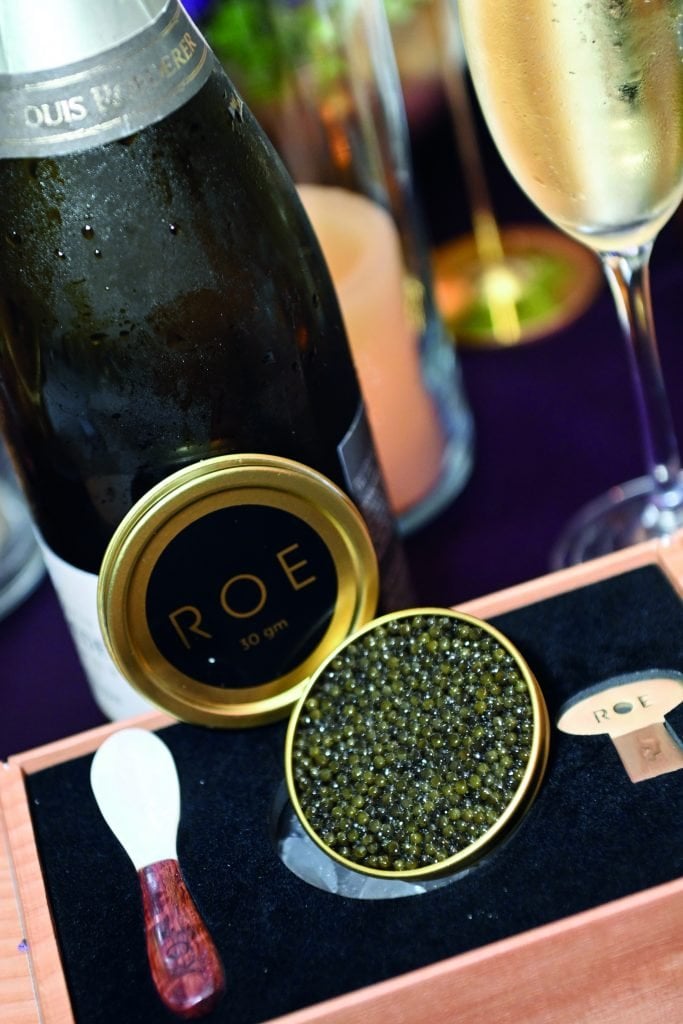
Caviar is the name for salted roe (or unfertilized egg) sourced from sturgeon, a large fish that dates back to the dinosaurs. There are many different types—including Osetra, Kaluga and Beluga—each typically corresponding to different sturgeon species.
It hasn’t always been expensive. In the 1800s, caviar was sometimes given away as a bar snack. More recently, in the 1990s, the collapse of the Soviet Union depressed prices for the roe, much of which then came from the Caspian Sea. Overfishing ensued, leading to rapidly depleted supplies and bans on wild-caught sturgeon. Today, the vast majority of caviar in the U.S. comes from farmed fish.
It has remained expensive relative to other foods, partly because it can take a sturgeon many years to produce eggs. Over the last decade, fish farmed in China have come to maturity.
“There’s so much Chinese caviar available right now, and a lot of it is very cheap and a lot of it is very good,” said Gabriella Gershenson, author of the forthcoming book “Caviar (& Champagne).”
Kaluga Queen, a colossal producer in China, supplies to DTC brands like Roe House and Quince, along with Michelin-starred restaurants. Quince sells thousands of products across categories, and caviar is now among its top 100, said Daphne de Chatellus, the brand’s head of emerging categories.
Some close to the industry say the DTC brands have given the market a bit of a Wild West feel. Gershenson, who has written extensively about caviar, noted how some sellers “pop up in your algorithm, you don’t know where they came from and they don’t seem to have the history or accountability of an old-school brand.”
I found the websites for Loft, Imperia and Petrusco—three brands that kept appearing on my Instagram feed—to be fortune-cookie vague. Through a representative, I eventually discovered that all three are owned by Los Angeles entrepreneur Sony Mordechai. Over email, a spokesperson for Imperia said the brand was founded in 2018 and its caviar comes from “select farms across Europe, Asia and South America.”
The taste test
You may be wondering: How does DTC caviar taste? I’m a novice, so I recruited a caviar-loving colleague to join me for an impromptu tasting session of five brands.
Beforehand, I consulted experts for tips. The number one rule, said Ariana Aimani, director of strategic partnerships at premium brand Paramount Caviar, is that caviar shouldn’t taste or smell fishy. Caviar Russe’s Panchernikov added that the eggs should all be intact (no mushiness), and should taste “rich, buttery and almost creamy.”
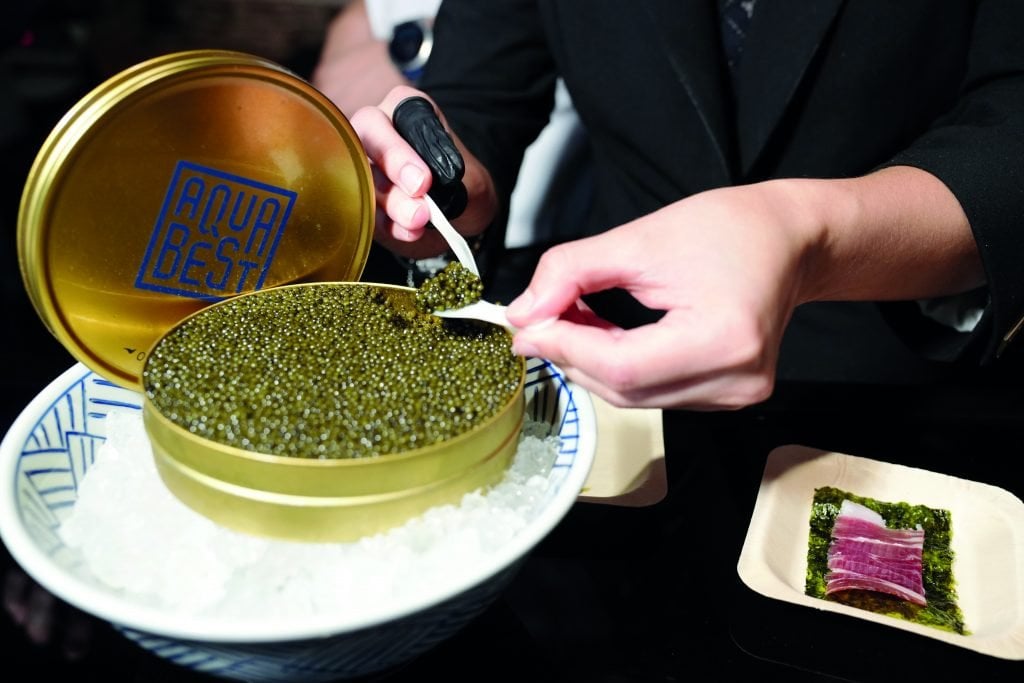
All the caviar we sampled looked pristine, but some roe tasted like a big ol’ gulp of the ocean, including two varieties from Imperia, a limited edition Petrusco offering, and Roe House’s Hackleback. A few options impressed us. Roe House’s White Sturgeon was subtle and moreish; Cavi’s Kaluga Hybrid and Osetra varieties won extra points for butteriness. “Delicious,” declared my colleague.
We also liked the Quince caviar. Mallory Aylesworth, a 34-year-old working in senior-living sales in St. Charles, Ill., likes it, too.
In years past, Aylesworth, who considers herself “a very bougie person,” would only eat caviar at restaurants on special occasions. But lately she has bought several tins from Quince. Their price and size mean she and her husband can indulge a little more freely. Aylesworth has even given her darling two-year-old an occasional mouthful.
The toddler’s response? “More, more, more.”
(*Prices are in USD)