

How One Winery Is Fighting an Industry Slump-By Elizabeth Garone,WSJ



This isn’t a great time to own a vineyard.
The wine industry is in the midst of a major downturn, with some growers tearing up healthy vineyards to plant higher-yielding crops, while others are declaring bankruptcy.
California, which produces more than 80% of the wine grapes in the U.S., is feeling the hit especially hard. In 2025, California’s growers crushed a total of 2.76 million tons of grapes—down about 6.1% from the 2024 crush of 2.94 million tons. It was the lowest total in more than 20 years, according to a report by the Pacific Regional Office of the USDA National Agricultural Statistics Service and the California Department of Food and Agriculture.
A number of factors are slamming the industry, including public-health warnings about the dangers of alcohol and changing consumer tastes, especially among younger drinkers. High tariffs aren’t helping: Last year, for instance, U.S. wine exports to Canada fell by 78% from 2024.
To weather the downturn, wineries in California and across the country are coming up with new strategies. They are focusing on higher-end wines—which haven’t been hit as hard by the drop—as well as trying to come up with innovative products and services to supplement wine sales.
To get a closer look at the pressures on wineries, and what they are doing to survive, consider Somerset Vineyard & Winery, in Temecula, Calif., located in the Inland Empire between Los Angeles and San Diego. In 2025, Somerset’s revenue dropped to about $3.3 million from $3.5 million in 2024, and the winery posted its first net loss.
“When I bought the winery, I thought it would be so much fun if we could sit behind a bar and say, ‘Would you like a red or a white?’ ” says co-owner Kurt Tiedt. “I thought that was how easy it might be, but no, it’s very, very challenging.”
House of the spirits
Back in 2018, Tiedt, his wife, Nesreen, and a handful of childhood friends purchased the closed Keyways Vineyard & Winery and renamed it Somerset, after the street they grew up on. Its vineyards were in excellent condition, Tiedt says, and the new owners still grow the four varieties that Keyways had in place: Tempranillo, Grenache, Viognier and Roussanne.
Wine represents the biggest chunk of Somerset’s revenue. In 2025, the winery’s tasting room accounted for nearly two-thirds of total sales, $1.9 million. (That tasting-room figure includes wine—and other merchandise—bought by people who visit Somerset on wine tours.) Wine-club sales add almost another third of total revenue—about $1 million—but membership has fallen to around 2,100 or 2,200, versus a peak of 2,600 during the pandemic. The rest of revenue—about $400,000 total—comes from other parts of the business, such as special events and rental fees for a house on-site.
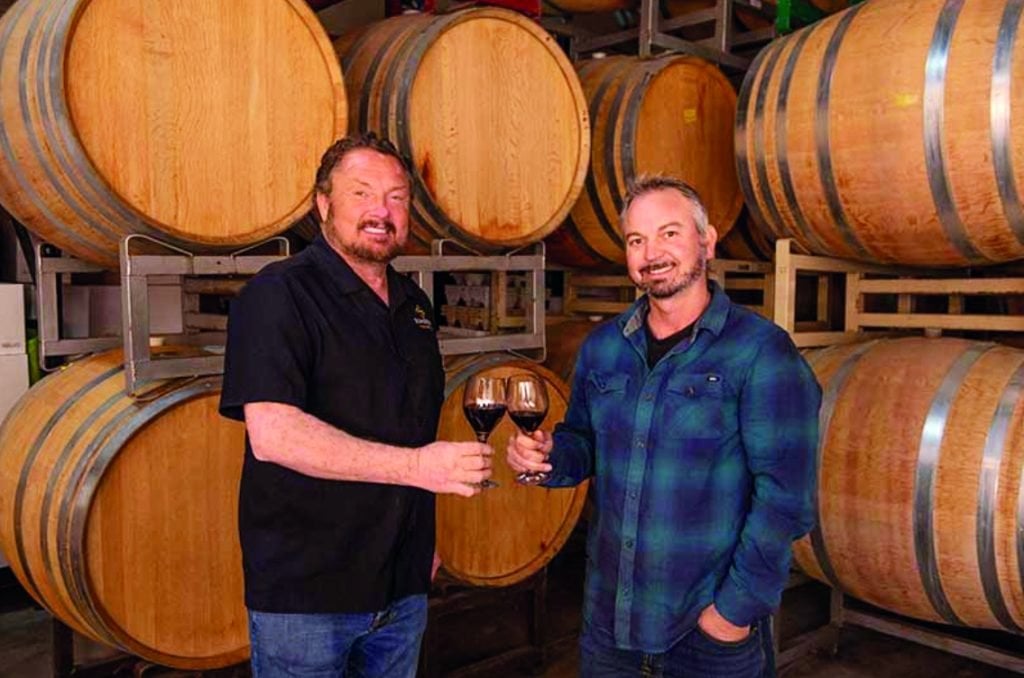
Somerset now produces roughly 100,000 bottles of wine a year but only grows about a quarter of the grapes it uses, buying the rest from several local vineyards—an arrangement that lets Somerset make up to 15 to 18 different wines in any given year. The owners have also bought a second, larger winery nearby, and are looking to grow varieties that other vineyards aren’t offering. Their focus is on grapes that thrive in the climate, which mirrors the Spanish Mediterranean and the Rhone Valley of France.
“Temecula typically has hot summer days and pleasant summer evenings due to the ocean breeze,” Tiedt says. “It is great for grapes.”
The winery currently has more than 160,000 finished bottles in its cellars, Tiedt says—representing about $6.4 million in retail sales, at an average of $40 per bottle. Along with other wines currently being aged, Somerset has three years of inventory in reserve. About 100,000 bottles of that stock are red wines, which Somerset prefers to age for 18 to 24 months or more, versus just three to six for white varieties.
Newly planted vines need about three years before they can be harvested, and the winery tends to sign medium-term deals, three to five years, with the vineyards where it buys grapes.
Some deals only run a single season, however—and recently, many of those short-term agreements are for white-wine grapes. Customer demand for white wines soared this year, thanks to an unusually hot summer, among other factors; chilled white wines are better suited to the weather than reds.
“We have increased our white-wine production by 300% this year and lowered our red-wine production,” Tiedt says.
Aiming high
Like a lot of other wineries, Somerset is betting heavily on higher-priced wines, which it sells largely to wine-club members. Its top-selling white varieties run about $34 a bottle, well above industry average, against a production cost of about $10, for a hefty 71% margin. But Tiedt stresses that the production cost doesn’t include insurance, maintenance and other significant overhead, which cut down the profit.
The most expensive wines—those made in special terracotta vessels—run about $100, but cost more to produce, between $15 to $20 a bottle. That is a margin of up to 85%, but once again, Tiedt points out that the production cost doesn’t include overhead, such as the long-term investment in the terracotta vessels.
Over the past couple of years, a number of big expenses have driven up those overhead costs. For one, there are high expenses from building a new kitchen—$800,000—and making other improvements. Another big pain point: a one-time surge in annual fire and liability insurance, to $205,000 from $65,000, because of the fire losses from Napa Valley and Los Angeles. “That policy cost dropped to $140,000 this year, but we are still paying for the fires in other markets,” Tiedt says.
All those costs took a toll on the bottom line. In 2025, Somerset posted a loss of about $90,000, down from a profit of $12,000 the year before and $211,000 in 2023.
Spreading the vines
For smaller wineries to be successful in the current market, they need to be doing at least one of three things, says Christian Miller, the director of research for nonprofit market-research firm Wine Market Council. They need to sell to a less-tapped consumer niche; offer a distinctive wine (or other product); and/or be more efficient with things like hospitality and customer relations.
“A certain amount of growth has to be supported by making your winery’s visitation experience more attractive than others, as well as increasing awareness and interest,” says Miller.
Indeed, tours are crucial for Somerset. The winery gets fees from the tour companies for each visit, about $327,000 last year, but those fees basically just cover the cost of holding tastings for the visitors and giving them tours. On top of the fees, though, guests also spend an average of $14 on wine and merchandise, such as candles made using the winery’s bottles and T-shirts with its history. (The shirts are one of the most popular items, Tiedt says, and they make for great advertising.) Last year, those sales to tourists hit $790,000, which the winery counts as part of the $1.9 million revenue total for its tasting room.
Many guests also end up becoming repeat customers or joining a wine club, says Tiedt.
Of course, tours can also bring headaches. “It is very difficult when other wineries overpour their guests at the stop before our winery and we have to deal with tipsy or even drunk guests,” says Tiedt.
He has learned how to handle these guests delicately, and with humor. “An angry drunk person kicked out of a tour is a good way to get a bad Yelp review,” he says.
In addition to tours, the winery’s owners are pitching the place as a local gathering spot—with concerts and open-mic nights—and a venue for events such as weddings and corporate conferences. They stay open late some nights with food service, to lure in customers who don’t want to visit during the hot afternoon hours.
The expanded hours “brought a lot of people in and also got us a lot of loyal wine-club members,” Tiedt says.
Another source of income: an eight-bedroom house on the property. Rental income for the house, usually booked by the day or week, runs $200,000 annually, with up to another $100,000 for events such as weddings. A recent full-day rental of the winery by a corporation brought in $50,000. Profit from this side of the business usually runs about $20,000 to $30,000, but it didn’t turn one last year, due to extensive and costly renovations.
Tiedt isn’t too worried about Somerset’s future even with the challenges in the industry. In his prior career in real estate, he learned the up and down cycles of that industry, he says. “The wine industry also has its up and down cycles, and I believe we are positioned well for this downturn.”