

Don't Lose Sleep Over GLP-1s: Why ResMed Stock Is a Bargain-By Jacob Sonenshine,BARRON'S


ResMed, the San Diego−based medical device maker, has proven its worth with sleep apnea patients. The stock is cheap, mainly over concerns that GLP-1 weight loss drugs will make ResMed’s products less necessary. That means investors can buy into a growing market opportunity.
Behind the opportunity is continued adoption of continuous positive airway pressure, or CPAP, products. These masks and other devices are critical for sleep apnea patients. Almost one billion people worldwide suffer from the condition, according to the National Library of Medicine. Tens of millions of them rely on ResMed’s products.
Tens of millions of people are also on GLP-1s throughout the world. As they lose weight, their need for certain medical procedures and treatments declines. But the link to sleep apnea is still elusive.
GLP-1s don’t seem “to reduce the number of people who we are seeing have an interest in CPAP,” says Anita Shelgikar, a sleep medicine specialist affiliated with the University of Michigan. Patients can lose weight and still need CPAP.
Nor is obesity the only cause of sleep apnea. Some medicines such as sedatives, and even alcohol intake, can cause respiratory depression, supporting CPAP demand. And fluid can shift into a patient’s neck at night and disrupt the airway when they lie down.
In fact, GLP-1s can even prove a tailwind to CPAP demand. “One thing these GLP medications have increased is the awareness of sleep apnea,” says Shelgikar. “It has motivated people to pursue a sleep evaluation when otherwise they would not have.”
Supporting that, ResMed CEO Mick Farrell said on the October earnings call that “we are still seeing that patients who have scripts for both CPAP and GLP-1s are more than 11% more likely to start on CPAP therapy than patients who have a script for CPAP alone.”
Relatedly, the Democrats’ sweep in midterm U.S. elections brings about a greater probability of tax incentives for Affordable Care Act access, which would boost demand for all sorts of goods—including GLP-1s, adding more fuel for the weight-loss growth story.
ResMed has beaten sales estimates in each of the past 12 quarters and has never reduced long-term growth guidance. Its fiscal year first quarter, reported in late October, showed 8.4% year-over-year sales growth to $1.45 billion when excluding currency fluctuations and the negative, one-time impact of lost revenue from the divestiture of MatrixCare , a software company focused on senior care facilities. That’s in line with the high-single-digit growth it has seen in the past few years and the high-single-digit annual growth management said to expect over the coming five years, when it presented quarterly results in January.
The resulting sales growth can spur even more earnings growth because the operating margin can rise. ResMed hasn’t changed its longstanding commitment to keep research and development at roughly 6.5% of revenue. It should rise as a percentage of revenue this year, with Chief Financial Officer Aaron Bloomer noting on the call that the company has prioritized investments in creating new, cutting-edge products.
That’s why analysts forecast a 37% operating margin by 2030, up from 36% in fiscal 2027, according to FactSet.
Combine that with continued stock buybacks, and earnings per share can grow in the double-digit percentages. ResMed has a record of executing profitable growth, with enough cash left for repurchases. Earnings per share grew 17% in fiscal 2026, with margins rising a touch.
That’s the type of profit growth the market should appreciate soon, as the company continues to execute. It often provides fairly low guidance, thereby setting its own bar low—and then beats Wall Street estimates. That, combined with no real evidence of demand destruction from GLP-1s, can catalyze stock gains.
“We think management is also baking in some conservatism,” writes William Blair analyst Brandon Vazquez, who expects margin expansion and over 12% EPS growth in fiscal 2027.
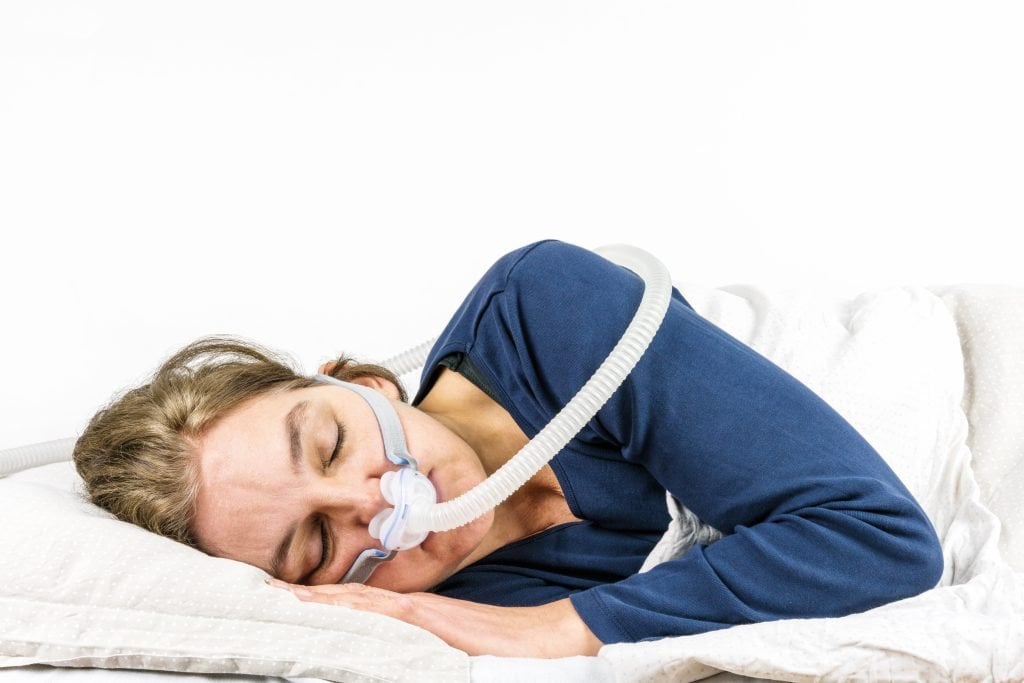
depression, supporting CPAP demand..(圖片來源:iStock photo)
Stable growth from the company’s residential-care software business could aid the market’s confidence in long-term growth. This business provides software applications that help nursing and care providers track patients’ data, and helps ResMed maintain the competitiveness of its overall product offerings. Totaling $155 million, it grew 8% in the most recent quarter in constant currency, excluding the MatrixCare divestiture. Farrell said on the call to expect high-single-digit revenue growth and expanding margins in that segment.
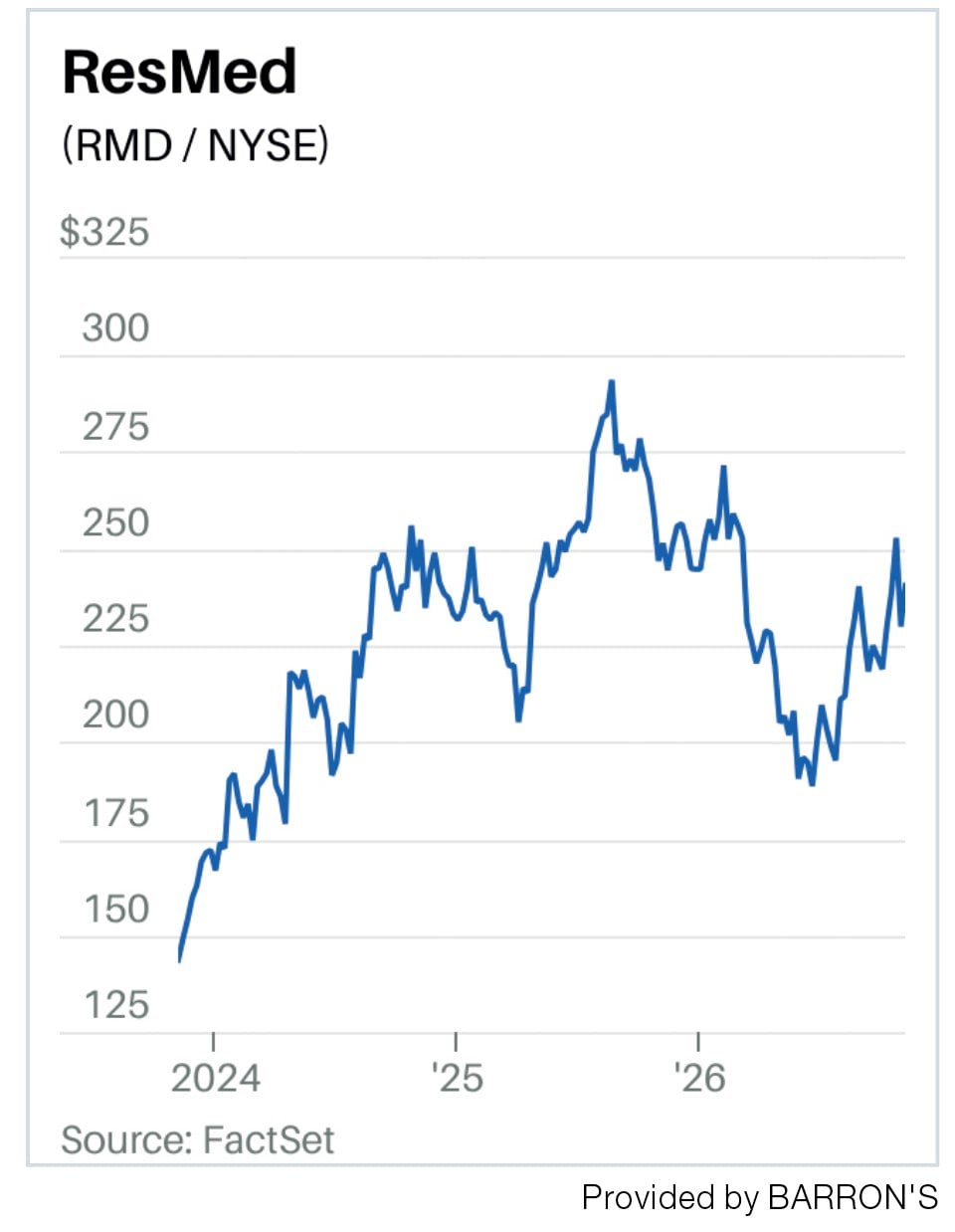
The picture of strong earnings growth can lift the company’s valuation. The stock trades at about 19 times next the next 12 months’ earnings, only a point above the S&P 500 ‘s valuation. But with its durable EPS growth—higher than what investors expect from the index in the long term—it can trade more richly. It touched 26 times as recently as 2024.
Given the valuation, “risk/reward is favorable for a double-digit EPS grower,” Vazquez writes.
Buying this name can help an investor sleep at night.
免責聲明:本專頁刊載的所有投資分析技巧,只可作參考用途。市場瞬息萬變,讀者在作出投資決定前理應審慎,並主動掌握市場最新狀況。若不幸招致任何損失,概與本刊及相關作者無關。而本集團旗下網站或社交平台的網誌內容及觀點,僅屬筆者個人意見,與新傳媒立場無關。本集團旗下網站對因上述人士張貼之資訊內容所帶來之損失或損害概不負責。