

What a Democratic Congress Would Mean for Wall Street-By Joe Light,by BARRON'S



Investors should get ready for changes in Washington. President Donald Trump’s thin congressional majority is on the ropes, with Democrats needing to pick up just four House seats and four Senate seats in the Nov. 3 midterms to secure power on the Hill.
While the outcome of the elections isn’t a foregone conclusion, as of this writing Democrats are overwhelmingly favored to take control of at least one chamber of Congress. Bettors on prediction market Kalshi give them 91% odds of taking control of the House and a 65% shot at the Senate. If either chamber of Congress flips blue, Republicans’ legislative agenda would face major obstacles, and companies from across industries might be impacted.
Political gridlock isn’t necessarily bad for investors. Since 1930, midterms resulting in a Republican president and Democratic Congress have produced average S&P 500 gains of 15% in the 12 months following the election, compared with a 10% decline when they produce a Republican president and Congress. When Congress splits, the S&P 500’s average gain rises to 23%.
“Wall Street generally prefers a divided Washington, but investors shouldn’t confuse legislative paralysis with political tranquility,” says Milan Dalal, a lobbyist at Tiger Hill Partners and a former Democratic congressional aide. “Some industries will inevitably find themselves in the crosshairs.”
A Democratic Congress could make for a rocky road ahead for many companies and markets. The GOP’s corporate allies in crypto, banking, and artificial intelligence might be subject to congressional investigations. Trump’s tariff regime, which he essentially controls unilaterally, could intensify as he leans more into trade policy. The executive branch’s deregulatory efforts could stall, and debt ceiling brinkmanship could return as Democrats look for leverage to achieve their own policy goals.
Democratic leadership could also give hints about the future atmosphere for stocks and Washington’s regulatory and policy landscape, should the party take the presidency in 2028. Ideas like Medicare for All will be dead on arrival with Trump, but Democrats will at least get a chance to test the waters for the next time they occupy the White House.
“The ideas that catch resonance will likely set the agenda for 2029,” says Stephen Myrow, managing partner of Beacon Policy Advisors. “Just because these things don’t necessarily get done in the next two years, investors still have to pay attention to that.”
Here are potential impacts of the likely election outcome on eight key areas for investors to keep an eye on.
Challenges to Banks’ Washington Wins
From the largest, most sophisticated financial institutions to community-based lenders , banks have racked up victories while Republicans control Congress and Trump-appointed officials lead financial regulators. Bank lobbyists have won watered-down capital requirements, a friendlier annual stress-testing framework, scaled-back consumer-protection enforcement, and reduced small-bank supervision.
After the election, Democrats could control the influential House Financial Services and Senate Banking committees, empowering them to challenge and delay the administration’s deregulatory efforts. Democrats have built up an oversight agenda while in the minority, and leading key committees would “equip them with the tools to pursue it,” according to the law firm Paul Hastings.
The top Democrats on those committees, Rep. Maxine Waters of California and Sen. Elizabeth Warren of Massachusetts, have laid the groundwork. In recent months, Warren has called on regulators to investigate crypto firms, private-equity companies, and prediction markets. Waters has demanded briefings from major banks, including JPMorgan Chase, Citigroup, and Bank of America , on AI-related concerns. They could use investigations and requests for documents from federal agencies to slow Trump’s agenda, according to Brian Gardner, chief Washington policy strategist at Stifel Financial.
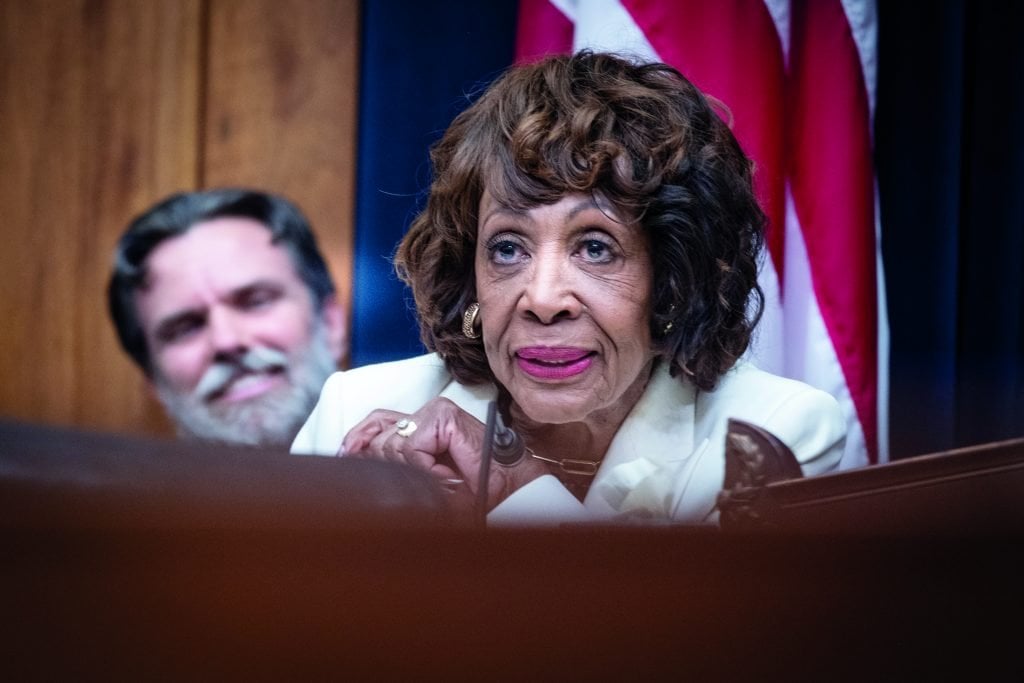
Democrats have endorsed her leadership for the next Congress.(圖片來源:Photo by Pete Marovich/Getty Images)
Gardner notes that although inquiries “can divert an agency’s time and energy from implementing” that agenda, they can’t stop it outright. — Rebecca Ungarino
Energy Projects on the Line
The elections could have a major impact on energy companies even before the new members of Congress take office in January.
A sweeping, bipartisan energy-permitting bill—the top legislative priority of oil-and-gas companies in the current legislative term—is awaiting a vote in the Senate. The bill would speed the pace of projects from oil pipelines to electricity transmission lines, limiting legal and political challenges.
Its passage would be a big victory for companies like Williams and Energy Transfer, whose projects have sometimes been stalled or killed by lawsuits and permitting delays. Opponents say it guts environmental protections.
The bill won’t be voted on until after the midterms, and the politics of its passage could change at that point. Some Democrats, including Rep. Jared Huffman of California, think their party should rewrite the bill if they win because they can introduce something more green-friendly in the next Congress. “Nov. 3 is coming and we are likely to soon have a far better negotiating position,” he said in a public statement about the bill.
Permitting-reform proponents might still have the votes to pass it, with or without progressive Democrats. But the possibility of a Democratic sweep throws its passage into doubt. — Avi Salzman
Crypto’s Losing Streak Could Continue
For a crypto industry fresh off a major disappointment in Congress, Democratic wins would only portend more pain.
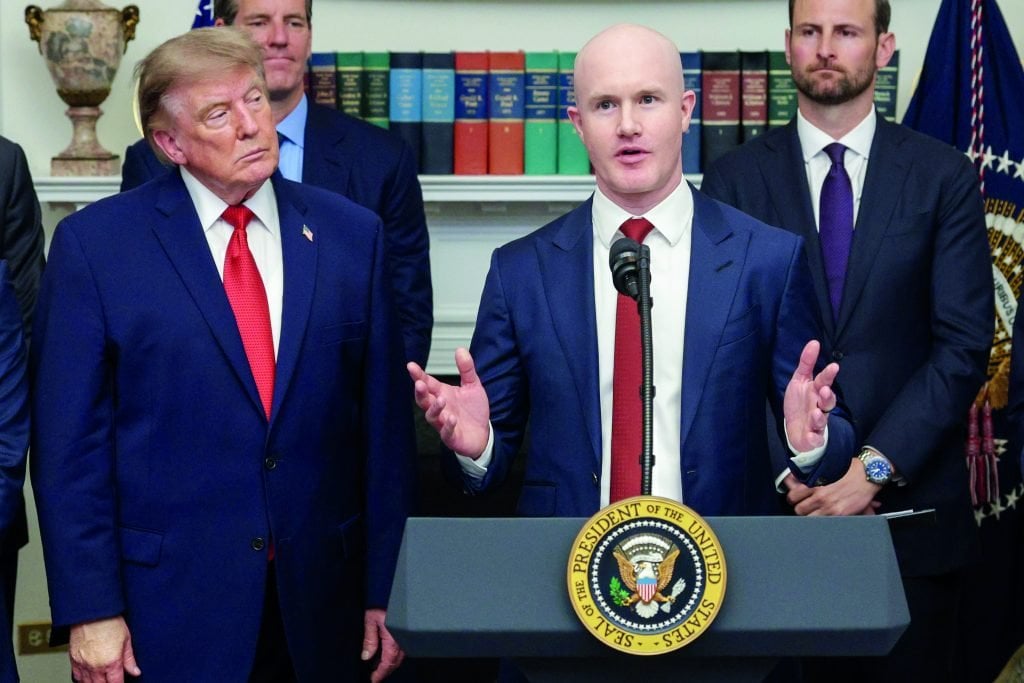
The Senate failed to progress the Clarity Act in September because Democrats demanded the bill restrict Trump’s crypto investments, which yielded him more than $1 billion last year. The bill would have put most crypto trading outside the purview of securities regulators, a major goal of industry stalwarts like Coinbase Global.
Republicans might still want to give the bill another shot, but Democrats are more likely to want to focus on other issues that might appeal to voters in the 2028 presidential election, including alleged misdealings by the administration. Should Democrats control the Senate, crypto executives are more likely to be hauled before the Banking Committee to testify on their ties to the White House than they are to get a bill that helps them, says Dalal, the lobbyist.
“There will be a lot more scrutiny of the crypto industry as opposed to trying to advance legislation that creates a digital asset framework,” he says. — Joe Light
Headline Risk for Healthcare Stocks
Polls show that healthcare costs are a top concern for voters, who have seen a nearly 50% rise in out-of-pocket healthcare spending since 2020.
Some Democratic candidates, such as Michigan’s Abdul El-Sayed and Maine’s Troy Jackson, are pushing Medicare for All, a decades-old progressive policy proposal for universal healthcare coverage, back into the national spotlight. Opponents say the policy would undercut private insurers, and it might not have enough Democratic votes. Regardless, investors should expect an intensified focus on insurers and pharmaceutical companies if Democrats gain control of one or both chambers.
The party’s list of policy ideas includes variations on breaking up vertically-integrated healthcare companies, cracking down on insurance denials of medical claims, shoring up corners of the insurance industry that serve the Medicaid and Affordable Care Act markets, and capping drug prices. Some of these proposals have broad popular support.
Sweeping reforms aren’t likely. Veto-proof legislation would require a two-thirds majority, which Democrats probably won’t have. Even so, “there will be headline risk, and there will be hearings and investigations,” says Molly T. Turco, managing director for healthcare policy in TD Cowen’s Washington Research Group. “Investors will react to that.”
Control of hearings would give Democrats airtime for their proposals and offer opportunities to capture video clips that make insurance and pharmaceutical executives look bad. — Catherine Dunn
AI Execs in the Hot Seat
One area that could have strong support in the new Congress, regardless of which party has the majority, is legislation protecting Americans from potentially higher utility costs due to the power demands of new data centers. This is despite mixed evidence that data centers are the primary driver of electricity inflation.

Sens. Richard Blumenthal(D., Conn.)and Josh Hawley(R., Mo.)have proposed a bill that would force data-center developers to provide their own power; a similar bipartisan bill passed in the House in September. Trump might support some version of these bills, even if it is pushed forward by a Democratic-led Congress. He has already signed an executive order that asks tech companies to cover their AI-related electric costs.
A Democratic House or Senate could also bring more scrutiny on AI companies and their leaders. A group of Democrats has already requested Nvidia ‘s Jensen Huang and OpenAI’s Sam Altman testify in oversight hearings, which could result in embarrassing moments that sour public sentiment on the sector and move tech stocks lower. — Adam Levine
Housing-Cost Solution Could Stall
Whether on rentals or purchases, housing costs just keep rising. Home prices measured by the S&P Cotality Case-Shiller Home Price Index are up 56% nationally since the end of 2019, while rents measured by Zillow are up 40%.
Legislation aimed at addressing housing costs, called the More Homes on the Market Act, is currently pending in Congress. Both the House and Senate versions of the bill seek to double the home-sale capital-gains exclusion limit to up to $1 million and index the cap to inflation. Industry lobbyists like that idea because they think it will encourage more home sales, but it could face new hurdles in a Democratic Congress.
The legislation would lower the government’s tax revenue from home sales—likely not something Democrats seeking to generate more tax revenue would be keen on.
The housing industry could also be impacted at the regulatory level, says Bill Killmer, chief lobbyist for the Mortgage Bankers Association, a housing-industry trade group.
“If Democrats retake one or both chambers, there is going to be a very coordinated and intense level of oversight on all of the housing-related regulators,” Killmer says. That could include the Federal Housing Finance Agency, run by longtime Trump ally Bill Pulte. — Shaina Mishkin
Renewed Trump Trade Aggression
Analysts are bracing for a more aggressive geopolitical posture from Trump if Democrats take control of Congress. That means his tariff threats aren’t going away soon. “Trump won’t want to be perceived as a lame duck,” says Owen Tedford, an analyst at Beacon Policy Advisors. “If there’s a [Democratic] sweep, he will want to continue to exercise power to stay relevant. Tariffs and trade are areas where he has shown interest and believes he gets outcomes.”
Analysts expect the administration to unveil new Section 301 tariffs against 16 countries, including China, related to complaints about overproduction, as the administration tries to rebuild or replace the tariffs the Supreme Court struck down in February. Congress has little say over these tariffs.

The electoral outcome could transform the future of the U.S.-Mexico-Canada trade pact, however. The administration chose not to renew the agreement or withdraw from it, leaving it in limbo until the three countries decide whether to extend it, formally withdraw from it, or wind down the current arrangement in 10 years as the terms stipulate.
A Democratic sweep that raises expectations for a Democratic presidential victory in 2028 could prompt Mexico and Canada to wait to renew the pact, in hopes of getting a better deal then. But that could also backfire. “If Trump feels that Mexico and Canada are trying to hold out for a better deal and stringing him along, he could threaten to withdraw from USMCA,” Tedford says.
Congress would need to vote on a withdrawal. But Eurasia Group analyst Noah Daponte-Smith says Trump could unilaterally remove the exemptions that allow about 80% of Mexican and Canadian imports to trade tariff-free, essentially ending the pact. Supply chains across North America would be disrupted.
Democratic wins could also boost momentum around several bills targeting China, including the Match Act, sponsored by Rep. Michael Baumgartner (R., Wash.)and co-sponsored by a bipartisan group of other representatives. The bill would tighten restrictions on China’s access to semiconductor manufacturing equipment. According to Tedford, House Speaker Mike Johnson(R., La.)has so far thwarted the bill from advancing, at Trump’s behest. Momentum on the bill after the midterms could provoke a negative response from Beijing. — Reshma Kapadia
Possible Bond Market Volatility
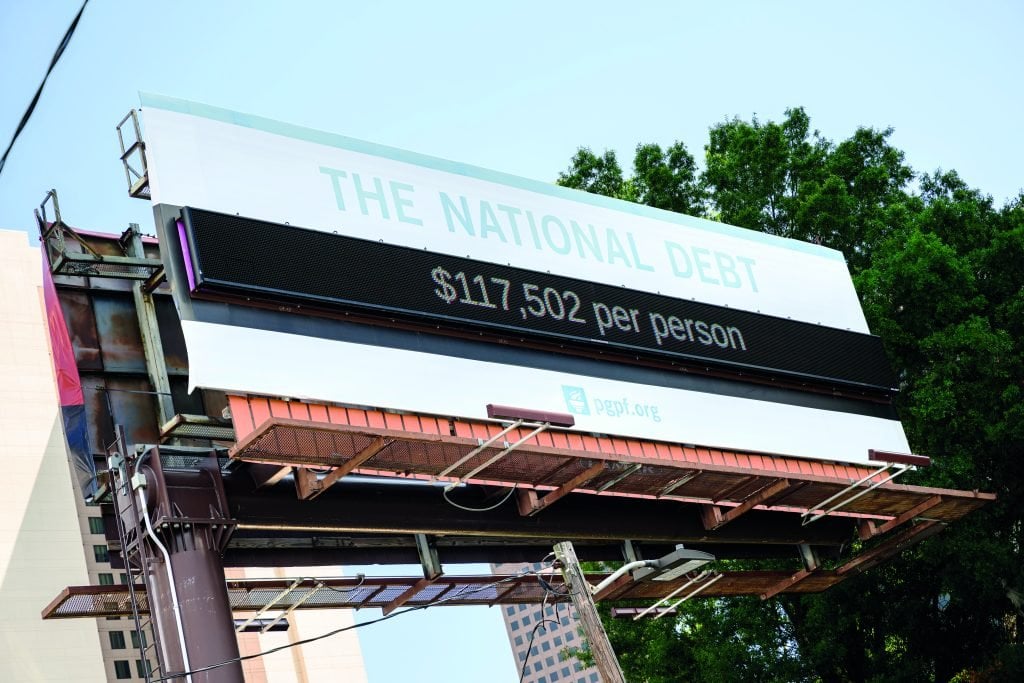
Treasury buyers have been demanding higher yields recently on worries about runaway government spending, among other things. Yields on 10-year Treasury notes hit highs unseen in decades after the federal deficit surpassed $40 trillion in August.
That spending will be back in the spotlight after the election. The government is on track to hit its debt ceiling early next year, and if Republicans keep control of Congress, negotiations on raising it would be more contentious and require a recalibration of spending priorities. Negotiations could come down to the wire if compromise proves difficult—meaning more market volatility, with investors avoiding shorter-dated debt or Treasury bills out of fear they won’t be repaid. undefined undefined Meaningful deficit reduction is unlikely, regardless of the election outcome. “It is more probable that the markets will need to force a change in mind-set, as even heading into the midterms there is very little discussion in Congress on how to rectify the elevated fiscal deficit,” Padhraic Garvey, ING Bank’s regional head of research, Americas, wrote to Barron’s.
Treasury yields will likely move higher only if investors foresee a larger-than-expected deficit, according to Ariana Salvatore, Morgan Stanley’s head of U.S. public policy research. That would be the base case if Republicans win Congress, as they would likely push through tax cuts and spending increases, such as those proposed in the administration’s supplementary defense funding request.
“While this is a low-probability scenario, it could prove quite market-moving,” wrote Gennadiy Goldberg, TD Cowen’s head of U.S. rates strategy.
A Democratic sweep could mean GOP-led funding cuts to food stamps and Medicaid are reversed. But “at least Congress is unlikely to pass larger spending bills” due to gridlock, Goldberg wrote. “Therefore, the deficit trajectory is unlikely to get materially worse.” — Karishma Vanjani
免責聲明:本專頁刊載的所有投資分析技巧,只可作參考用途。市場瞬息萬變,讀者在作出投資決定前理應審慎,並主動掌握市場最新狀況。若不幸招致任何損失,概與本刊及相關作者無關。而本集團旗下網站或社交平台的網誌內容及觀點,僅屬筆者個人意見,與新傳媒立場無關。本集團旗下網站對因上述人士張貼之資訊內容所帶來之損失或損害概不負責。